

Services · Simulation
WPSTAB
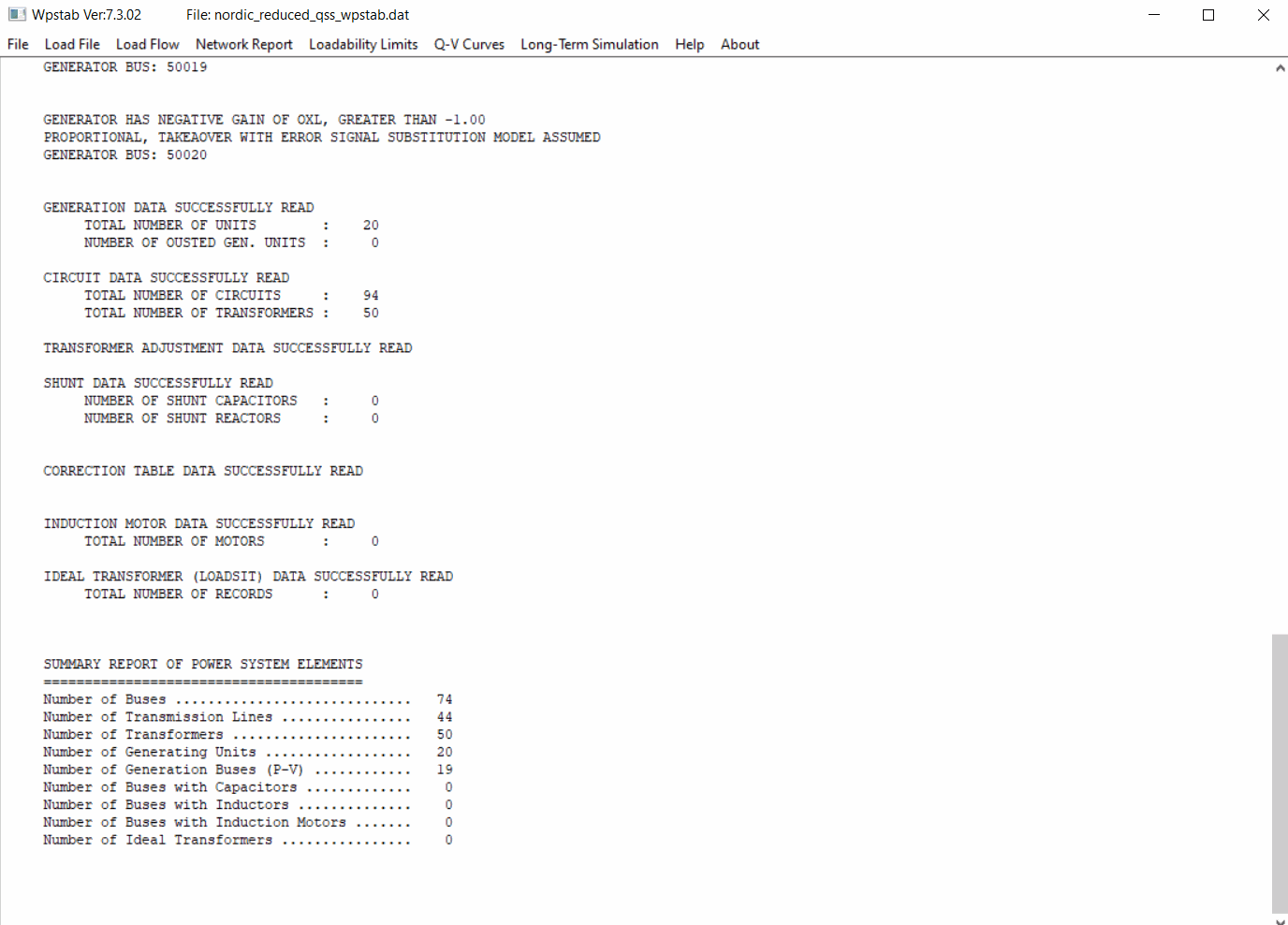
A quasi-steady-state power systems simulation program, developed in the National Technical University of Athens under the guidance of Professor Costas Vournas.
The method
Built for the timescale voltage collapse actually happens on
Long-term voltage instability develops over minutes, driven by load recovery, tap changers and generator field-current limiters — not over the first seconds after a fault. Full electromechanical simulation is an expensive way to study that timescale.
Quasi-steady-state simulation represents the fast dynamics by their equilibrium and integrates only the slow ones. The result is a time-domain method fast enough to run the number of scenarios that long-term stability assessment requires.
Capabilities
What the program does
Simulation
QSS time domain
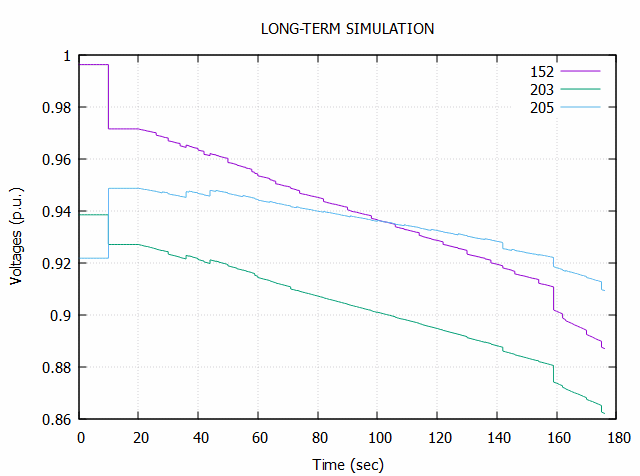
A fast time-domain method well suited to the analysis of long-term voltage stability phenomena.
Plotting
PV and QV curves
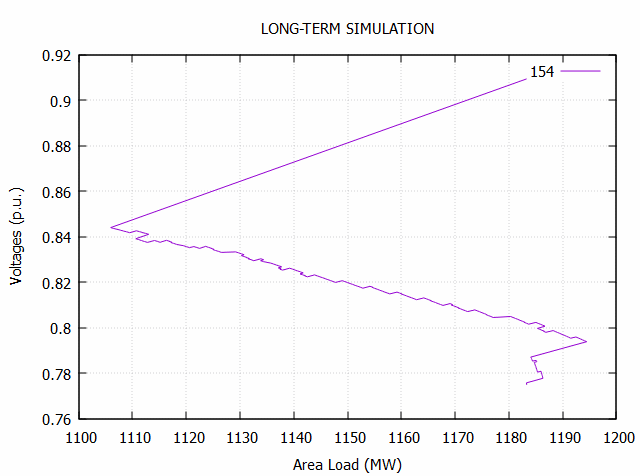
Wide plotting capabilities, including PV and QV curves and time-responses for any monitored quantity.
Analysis
Sensitivities and eigenvalues
Advanced calculation features: sensitivity analysis, and eigenvalue and eigenvector analysis.
Models
Model library
Distributed energy resources, protection equipment and generator controllers.
Want to see WPSTAB run on your network?
We can demonstrate the program against a case from your own system.